For youth coachesThe week in youth football, picked for coaches
Issue08
9 Nov to 15 Nov 2026
1,030,243 players
What the silent weekend asks of parents
Four pillars
Raise the demands and keep the trust
10 questions
What parents weigh before joining a club
Cover storyCoaching · Josselin Lebreton
One change each session
Four forms of play that carry over to match day
7 languages · read online · free PDF
hobbit.football/news
PriceFree
HW 2026 · 08
Editor's note
One Change, More Ball Time
The ball sits still while a coach reads out a new rule for the third time, and the players drift toward the water bottles. That is what happens when we change everything at once.
This issue keeps pointing to the same thing: the constraint is the session. The FFF guidance says change only one constraint at a time so sessions stay coherent. Des Ryan says technique comes before load, starting with daily activity and unstructured play.
“One change at a time.
You can use that next weekend too. Silent Support Weekend asks spectators to applaud but not shout, and coaches can still encourage. That is one constraint lifted and one kept. So before your next session, ask yourself: what single thing am I changing today?
The Hobbit editors
8
stories
6
sources
8
languages
HOBBIT WEEKLYIssue08
For coaches
Before your next session, check which of the four forms each of your situations sits in, since that choice decides whether the work shows up on match day.
Cover storyCoaching · Josselin Lebreton
01The 4 forms of play in youth soccer: from rondo to scenario-based play - FFF
For coachesBefore your next session, check which of the four forms each of your situations sits in, since that choice decides whether the work shows up on match day.
The forms of play in football, as the National Technical Directorate presents them, go from play without direction of play to the match with scenarios: each form adds a constraint, and it is this progression that makes a session coherent.
The problem: well-executed exercises that lead nowhere
Your session was fluid. The players were active, the instructions understood, the exercise ran well. And yet, at the weekend, none of it shows up in the match.
This week
02Safety and welfare
Record numbers to participate in National Silent Support Weekend
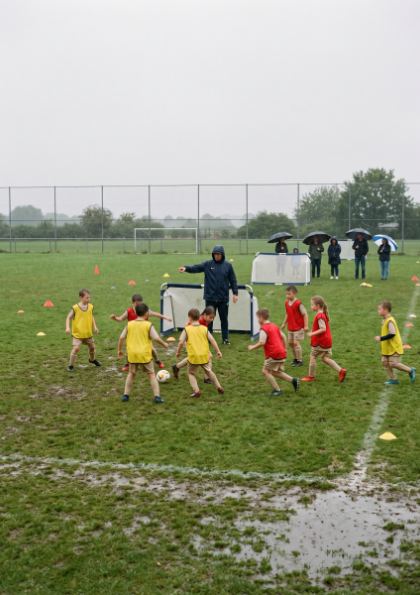
For coachesIf your league takes part, talk to parents beforehand about applause instead of shouting, so the quiet sidelines feel planned rather than imposed on match day.
Over 1 million participants have signed up for the first Silent Support Weekend of the season
The first National Silent Support Weekend of the 2026-27 season takes place this weekend, with record numbers of participants, clubs and leagues signing up to encourage positive touchline behaviour across grassroots youth football in England.
After surpassing 1 million participants for the first time in the last National Silent Support Weekend in March 2026, the initiative returns this weekend to demonstrate how a pressure-free environment benefits young players.
Grassroots leagues across the country are encouraged to take part to promote positive forms of support and help create a calm, encouraging environment.
During games, spectators are welcome to show appreciation through applause for good play, while coaches can offer encouragement to their teams. Spectators are asked to avoid shouting or calling out. The initiative is designed to give young players the space to thrive without distractions from the sidelines.
So far, a record number of 231 leagues, 82,330 teams and 1,030,243 players have signed up to be involved across the weekend. This is the first of two National Silent Support Weekends in the 2026-27 season, with the second to take place in Spring 2027.
On the pitch
06Coaching
A Parent’s Guide to Strength and Conditioning
For coachesUse his rough stage guide in your sessions: games and bodyweight movement under 10, basic patterns at 10 to 13, and external load only once technique is solid.
Once you know strength training is safe and beneficial for young athletes, the next question is usually: what should it actually look like for my child?
Our podcast guest Des Ryan has spent his career developing young athletes. He was Head of Sports Medicine and Athletic Development at Arsenal Academy, Head of Strength and Conditioning at Connacht Rugby, and is now Director of Coaching and Performance at Setanta College. He described strength and conditioning as something of a “minefield” for parents. Here’s a guide to help you find your way through it.
It starts with being active, every day
Before anything else, Des highlighted the importance of regular activity, both structured (training, PE, organised sport) and unstructured (play, games in the park, climbing, riding bikes).
Unstructured play builds the foundations every athlete needs: balance, coordination, agility and confidence in how they move. No gym programme can replace it.
Des also discussed the wider debate around early specialisation. Playing a range of sports, especially when young, develops a broader range of movement skills and reduces the risk of overuse injuries from repeating the same movements again and again. Good strength and conditioning should complement your child’s sport, not replace the variety they need.
Research and data
07Research
ParticipACTION’s Early Years Report Card: Are Young Kids Developing Physical Literacy?
For coachesIf you run parent-and-tot or preschool sessions, the 41% participation figure and the report's push for child-led play and basic movement skills give you a case for keeping sessions playful rather than sport-specific.
On October 20, ParticipACTION released the 2026 ParticipACTION Report Card on Physical Activity for the Early Years, the country’s first report card focused entirely on children from birth to age 4.¹ The top line is encouraging: two-thirds (67%) of young children meet the physical activity recommendation in the Canadian 24-Hour Movement Guidelines for the Early Years, and most are getting enough sleep.
But only 25% meet all three recommendations, for physical activity, screen time and sleep, at the same time. That indicator earned a D-. Among toddlers, it’s 15%.
So most young children meet the physical activity and sleep recommendations. Screen time is the main gap: fewer than half meet that recommendation, and a child has to meet all three to count toward the 25%.
The Four Lowest Grades
24-Hour Movement Behaviours: D- (25%)
Active Transportation: D+ (37%)
Structured Physical Activity: C- (41%)
Sedentary Screen Time: C (48%)
Each of these depends on adult decisions: how children get around, whether they’re enrolled in programs, and how much screen time is allowed.
Views and the game
08Policy and clubs
The Equal Sport Project unites sport in the UK
For coachesIf your club runs girls' teams, the pledges on school access and facilities give you a framework to raise with parents and local partners when arguing for pitch time and funding.
The Equal Sport Project unites sport behind five shared ambitions for equality
Major sporting organisations and senior figures from across sport have today united behind an unprecedented cross-sector commitment to make the UK the world's leading nation for women and girls in sport.
The Equal Sport Project unites sport in the UK behind five shared ambitions to accelerate progress towards equality for women and men across sport - from local leisure centres to the biggest stadiums, and from grassroots pitches to boardrooms.
Major sporting organisations from all parts of the UK sporting landscape including The FA, RFU, Youth Sport Trust, England Netball, UK Sport, LTA, Women's Sport Trust, Women in Sport, Team GB and Sport England have published specific pledges to act and help deliver those ambitions while brands and broadcasters are also among the organisations weighing in to support.
The rest of the industry is also being asked to commit support and pledges as the project seems to gain momentum in the months and years to come.
The project launch comes at a time when the momentum of women's sport has never been stronger; participation is growing, audiences are growing and investment is accelerating.
HOBBIT WEEKLY
Ideas you read,
used in your next session.
Tell Hobbit your team's age and what you want to work on this week, and it writes a complete session from one sentence, with a diagram for every drill.
hobbit.footballTranslations by AI; every piece links to its original
FFF sets four game forms, one constraint added at a time
France's national coaching body sets out four game forms, from play without direction to scenario-based matches, and says coaches should change only one constraint at a time. Also this week: record sign-ups for England's National Silent Support Weekend, and a guide to raising standards without losing squad trust.
Every piece appears in full, translated by AI where the original is in another language. Copyright stays with each author and original publisher; every piece links to its original.
This gap often has a simple cause: the coach chooses exercises, but not the form of play. Yet the same theme (keeping possession, restarting, finishing) does not demand the same thing depending on whether or not there is a direction of play, whether the numbers are reduced or full, whether both teams have the same objectives or different objectives.
The National Technical Directorate (FFF) answers with a clear table: 4 forms of play, from the simplest to the closest to the match. Knowing them means knowing where to place each situation in your session, and above all why.
A question to start: in your last session, which form of play did each of your situations belong to? If the answer is not obvious, this article is for you.
The 4 forms of play at a glance
The further you go from form 1 to form 4, the more the game resembles the match: direction of play, system, full numbers and different objectives are added progressively.
Source: National Technical Directorate (FFF), slide "The different forms of play". The (+1) means that one more player can be added to create a numerical superiority.
The 4 forms of play in detail
Each form answers a different question. The examples below illustrate the DTN table: they are application ideas to adapt to your age group, not an official list. Pitch dimensions and durations are indicative.
Two words to distinguish clearly: the objective and the goal
The table speaks of "objectives" and "goals". To avoid any confusion:
The objective is the intention of play asked of the players: play in the gaps, play forward as soon as the ball is won, keep possession of the ball…
The goal is the way of scoring points: score in a goal = 1 point, string together 10 passes = 1 point, cross a line with the ball at your feet = 1 point.
Two teams can have the same objective and the same goal (form 2), different objectives and goals (form 3), or, in a match, different objectives for common goals (form 4). This is what changes from one form to another, along with the direction of play and the numbers.
Form 1 PLAY: play without direction of play
What the table says: without direction of play, numerical equality or not, reduced numbers, common objectives and goals or not. The examples cited are the 10-pass game, the game of the 3 colours, the rondo and preschool games (U6-U9).
Understanding the form. Without direction of play, there is no "right side": the ball can go in any direction and no one has a goal to attack or defend as in a match. The player does not have to manage collective organisation. He focuses on the ball, on the nearby space, on the nearest teammate and opponent. Reduced numbers do the rest: more touches of the ball, more decisions to make.
Why use it. It is the ideal form for multiplying touches of the ball, information-gathering and quick decisions, in a simple setting where you often succeed. It suits the youngest (U6-U9) and can also serve as a warm-up with the ball at any age.
Precise example 1: the 10-pass game (common objective and goals). Two teams of 4 players in a 20 x 20 m square. Each series of 10 consecutive passes earns 1 point. The team without the ball tries to win it back. Both teams have the same objective (keep the ball) and the same goal (10 passes = 1 point), with no direction of play. To adjust: limit to two touches of the ball, require passing through every player before counting, or add a neutral player who always plays with the team in possession.
Precise example 2: the 4 v 2 rondo (different objectives). An 8 x 8 m square: 4 players on the outside keep the ball, 2 players in the centre try to win it back. Here, the objectives are not common: keep possession on one side, win the ball on the other. When a defender touches the ball, he takes the place of the player who lost it. To adjust: reduce the square to speed up the play, limit to two touches, or ask for the ball to be circulated in one direction first.
Specific example 3: the 3-colour game. Players are divided into three colours with bibs. One possible version: the ball must circulate following the order of the colours (red, then blue, then yellow). The player receiving must look at where the partners in the right colour are before the ball arrives: this works on information scanning.
For the youngest (U6-U9). The table lists preschool games. Concretely, these can be games where each child has their own ball, dribbles it in a marked area and avoids the others, or relay games with a ball. The goal is first to play and touch the ball, not to understand a system.
What the coach observes. The quality of the first touch, the orientation of the body before receiving, the players' reaction to losing the ball, the communication between partners. A frequent mistake is to stay in form 1 when the group already masters these games: that is the sign that it is time to move up.
FORM 2 game: the direction of play, with the same objective and the same goal for both teams
Understanding the form. Two major changes compared with form 1. First, the players have a direction of play: a goal to attack, a goal to defend. Then, the game can be organized in a system or a sub-system, that is to say with lines and roles. The two teams facing each other have the same objective (for example playing in the gaps) and the same goal (for example scoring = 1 point): they play the same game, with the same rules. The (+1) means that one more player can be added to create numerical superiority, for example a neutral player who always plays with the team in possession.
IT IS THE GAME WE ALL KNOW, 8 V 8 OR 11 V 11
Why use it. Form 2 makes it possible to establish a principle of play in a context where success is made easier. Since both teams have the same rules, the players focus on a single subject: the principle being worked on. Numerical superiority helps them succeed, and therefore understand and reproduce.
Specific example 1: the gaps game at 4 v 4 + 1 joker. Pitch of 40 x 30 m, one goal on each side (with or without a goalkeeper depending on your squad). Two teams of 4 players and a neutral joker who always plays with the team in possession: the team in possession therefore plays 5 v 4. Common objective: look to play in the gaps, that is to say to pass the ball between two opponents to a partner who receives facing the play. Common goal: scoring = 1 point. The coach counts, for himself, the number of successful passes in the gaps in order to feed his observation. To adjust: limit the joker to two touches, reduce the width of the pitch to make the game more compact, or impose a zone through which the ball must pass before a goal can be scored.
Specific example 2: the system version, at 8 v 7. On a pitch of 60 x 45 m, each team organizes itself in its usual system (for example with 8). The team with superiority (+1) changes at each goal, so that everyone experiences both roles. Common objective: play in the gaps between the opponent's lines. Common goal: scoring = 1 point. Here, we work on the relationships between the lines and the players' movements within their organization, not only on the quality of the pass.
What the coach observes. Do the players identify the gaps before receiving? Is the receiver oriented towards the front? Is there support after the pass? Is the joker used as a support? A frequent mistake is to see the +1 as a favour: it serves to make the principle succeed, not to win more easily. When the group manages it without effort, remove the joker or move on to form 3.
FORM 3 game: different objectives and goals for each team
Understanding the form. The framework is the same as in form 2 (direction of play, possible superiority, system or sub-system), but each team now has its own objective and its own goal. The game becomes asymmetrical, as in a match where one team looks to build while the other looks to recover and counter-attack. The players can no longer apply the same answer everywhere: they must read what the opponent is doing and adapt their behaviour.
Why use it. Form 3 brings the game closer to the match without adding all of its complexity. It forces work on both sides of the same theme (building and countering) and calls on reading the game, transitions and decision-making.
Specific example 1: build up against counter-attack, 5 v 4. Pitch of 50 x 35 m. Team A (5 players, with a numerical advantage) attacks a large goal with a goalkeeper. Its objective: build up by playing in the intervals. Its goal: to score = 1 point. Team B (4 players) attacks two small goals placed on the opposite line. Its objective: to win the ball back and play out forward in a maximum of 3 passes. Its goal: to score in one of the two small goals = 1 point. Every 5 minutes, the two teams swap roles so that everyone experiences both situations.
Specific example 2: cross a line against score. On a half-pitch, team A must get the ball across an end line (by dribbling or by receiving a pass behind the line) to score 1 point: it looks to keep the ball patiently. Team B, meanwhile, scores in two small goals after winning the ball back. One team is forced to build up, the other to play quickly on the transition: the two logics oppose each other on the same pitch.
What the coach observes. Does team A change rhythm against a packed defence? Does team B play out quickly after winning the ball back, or does it keep the ball too long? Are the transitions (loss and recovery) quick? A common mistake is to set up the game in a way that is too unbalanced: if the score reaches 6-0, adjust the goals, the number of players or the rules rather than letting the game lose its meaning.
Game Form 4: the match with a scenario
Understanding the form. This is the form closest to competition: you play with a full squad, at equal numbers, with the team's system of play. The goals are shared (you score in the same goals, with the match rules), but the objectives are different because the scenario given to each team changes what it must look for. The table cites an example: "you are 1-0 down, there are 5 minutes left to play."
Why use it. Form 4 lets you check whether the theme being worked on survives the context of the match. It works on managing the score and the clock, collective decision-making, communication and leadership, situations that players experience at the end of matches without always having been prepared for them.
Specific example 1: "1-0 down, 5 minutes left." A match with a full squad (11 v 11, or 8 v 8 depending on your age group), timed over 5 minutes. The blue team starts 1-0 down: its objective is to equalise, which invites it to take controlled risks, push its lines up and speed up the game. The red team is ahead: its objective is to keep the advantage, which invites it to keep the ball, drop together and manage the time. Same pitch, same goals, two opposing intentions. After 5 minutes, swap the roles.
Specific example 2: "draw, 3 minutes left." Both teams are level, but not with the same needs: the blue team absolutely must win, the red team is happy with a draw. The first must dare, the second must control without dropping so deep that it suffers. This scenario is useful for working on choosing the moment to take risks.
To adjust. Change the starting score or the time remaining, add a playing theme (for example "the blue team must play in the intervals"), or stop the game for a minute to ask the players: "What have you changed in your organisation?"
What the coach observes. Does the team that is behind really change its shape or does it carry on as if nothing had happened? Who speaks up to organise the others? Does the team that is ahead know how to keep the ball and run down the clock? A common mistake is to start the match without announcing the scenario, or with a scenario that is too vague: both teams then play the same way, and form 4 loses its point.
Why it matters
Game forms are not one more label: they serve to steer the difficulty of what you offer.
Progression: the same theme is worked on first simply, then in a setting that is increasingly close to the match.
Transfer: you play as you train. The more the situation resembles the match (direction of play, system, different objectives), the more likely what is learned is to reappear at the weekend.
Regulation: if the group fails in form 3, you know where to go back down to (form 2) instead of improvising or changing the exercise.
Common language: in a club, coaches who talk about "form 2" or "form 4" understand each other without long explanations.
Common mistakes
A common mistake is to believe that "just letting them play" is enough. Here are the most common traps.
Going straight to form 4. The Thursday evening match is motivating, but the players repeat their usual responses without having been given the keys to change them.
Staying in shape 1 for too long. The rondo is an excellent tool, but the table links this form to games without game sense. If you never leave it, the group never encounters the logic of the match.
Confusing small-sided numbers with a game form. A 4 against 4 can belong to form 1, 2 or 3: it is game sense, the system and the objectives that make the form, not the number of players.
Changing everything at once. Going from a game without game sense to a full match with a system in a single step means asking for too many new things at the same time.
Forgetting to name the objectives. If your two teams have the same goals while your theme requires different roles (attacking, defending, managing the score), the situation does not produce what you are looking for.
And you, which of these mistakes do you recognize in your own sessions?
Method: building a session that progresses from form 1 to form 4
Here is a simple approach, usable from your next session.
Set the intention. A single theme, phrased in one sentence (for example: progress forward after a recovery).
Choose your entry point. A group of young beginner players naturally starts in form 1; a more experienced group can enter directly in form 2.
Observe before moving up. Do the players understand the game? Are the responses varied? If so, move on to the next form.
Add one constraint at a time. First game sense, then the system or sub-system, then different objectives.
Finish in form 4. A full-sided game, with a scenario, lets you check whether the theme survives the match context.
Go back down if the group loses track. Returning from a form is not a failure: it is regulation.
Field example: a U13 session in 4 stages
Let us take the example of a group of U13s and a single theme: progress forward after recovering the ball. The durations are indicative, to be adapted to your session.
Time | Form | Set-up | Key instruction
1 (10 min) | Form 1 | Rondo 5 against 2, without game sense | Keep the ball, find the free player
2 (15 min) | Form 2 | 6 against 5 (+1) on half a pitch, same objective and same goal for both teams | After a recovery, play quickly forward
3 (15 min) | Form 3 | One team crosses a line, the other scores in two small goals | Each team pursues its own objective
4 (20 min) | Form 4 | Full-sided match (8-a-side or 11-a-side depending on your age group) | Scenario: one team is trailing 1-0, 5 minutes remain
The coach can then observe what holds from one stage to the next. If the instruction "play quickly forward" disappears as early as form 3, there is no point moving on to the match: go back to form 2 and clarify the cue. If it survives the form 4 scenario, the theme is installed.
Tip for the scenario: reverse it at half-time of form 4. The team that had to come back from behind must then defend its lead. The players experience both roles.
Practical advice
Label your situations. On your session sheet, write "F1", "F2", "F3" or "F4" next to each situation. In a few weeks, you will see whether your sessions are balanced.
Keep a common thread. One theme per session, declined through several forms, is better than four themes in four exercises.
Vary the entry point. Sometimes start with form 4 to diagnose, then go back down to correct.
Speak the same language. Share this vocabulary with the other coaches at your club: a Monday session and a Wednesday session respond to each other better.
Question your players. Ask them: "What changes between this game and the match?" The answer reveals what they have understood.
What is the difference between form 1 and form 2?
Game sense. In form 1, there is none. From form 2 onward, it appears, with the possibility of working in a system or sub-system.
From what age should forms 3 and 4 be used?
The table links form 1 to preschool games (U6-U9), but it does not set an age for the others. The right criterion is the group's understanding: if the players succeed in the previous form, you can move up.
Is a rondo always form 1?
The table cites the rondo as an example of form 1, because it is played without game sense. As soon as you add game sense and objectives, you change form.
Should the 4 forms be chained in every session?
No. Depending on the duration and the theme, two or three forms are enough. What matters is that the sequence is consistent with your intention.
Can the game forms be used in 8-a-side football?
Yes. The table speaks of small-sided or full numbers: the reasoning remains the same, only the match format changes.
Conclusion: change the form before changing the exercise
When players do not play at the weekend the way they train, the first reaction is often to change the exercise. The 4 forms of play invite you to look elsewhere: in which form do you have your players play, and why that one?
Over to you: which form do you use most in your sessions, and which one is missing the most?
The FA's Director of Football Development, James Kendall, said: "The ever-growing popularity of our Silent Support Weekend demonstrates the importance of this initiative and the positive impact it is having on grassroots youth players. It's so pleasing to see record numbers of participants, clubs and leagues, and we look forward to seeing young players across the country enjoying the positive environments at their fixtures as part of the Silent Support Weekend."
The initiative supports the values outlined in our Grassroots Code of Conduct, which sets expectations for behaviour across the grassroots game: Enjoy the Game; Give Respect; Be Inclusive; Work Together; and Play Safe.
Group management in youth soccer: raising the demands without losing the locker room's trust
For coachesIf you are moving from the friendly coach to a firmer one, the sit-down talk before changing anything gives you a way to explain it to players and parents without it landing as a punishment.
Managing the group in youth soccer and raising standards without turning your bench into a military regime is the dilemma that keeps you awake at night when matches get complicated. You start the season wanting to be the approachable coach, the one everyone likes and who responds patiently to every mistake. But the first serious matchdays arrive, the opponents turn up the heat and you realize that smiles and pats on the back are not enough to compete or for the kids to grow. Then the fear creeps in: if I tighten the screws, if I demand more intensity, if I set hard limits... will I break the good atmosphere that cost me so much to build?
Let me talk to you coach to coach: absolutely not. Raising the bar does not mean destroying trust. Quite the opposite. When a player senses that you demand more of him, he understands that you believe in his potential. The problem appears when you do not know how to make that transition from a permissive style to firm leadership.
The big mistake: confusing closeness with a lack of rigor
Many young coaches fall into the trap of thinking that being a modern coach means being friends with the players. If you forgive late arrivals at training, if you let bad faces go when a player is substituted or if you allow a rondo to turn into a mess with no intensity, you are not being a good developer of players. You are being a comfortable coach.
The player, whether he is 8 or 17 years old, detects weakness instantly. If you do not correct the mistake so as not to bother anyone, the implicit message you send is destructive: "I do not care enough about your development to correct you."
Raising the bar has nothing to do with shouting from the touchline, pulling long faces or punishing the squad with laps of the field. That is not demanding standards, it is impotence. True rigor means being consistent in your rules, clear in your corrections and transparent in your intentions.
The reframing talk: change the frame before changing the rules
You cannot arrive at the field on a Tuesday and turn a joyful training session into a hell without explaining things beforehand. If you do, the squad will interpret it as a personal attack or as a passing anger at having lost on Sunday.
Before you put your foot down, gather your group in the dressing room. You need a clear reframing:
Direct honesty: Tell them what you have noticed. "We have managed to create a fantastic group, but we are settling for half of what we can give."
The real reason: Make them see that the increase in tempo is not a punishment, but a competitive necessity so that they become better players.
Handling the personal relationship: Make it clear that your human treatment of them will be exactly the same off the pitch, but that on the white line, focus and effort will be non-negotiable.
The 4 pillars for raising standards without breaking the dressing room
To get the squad to accept this step forward in a positive way, apply these four principles in your day to day:
1. Establish behavioral non-negotiables
Do not start by demanding perfect oriented controls if you do not even have the basic habits under control. Demanding standards are built on operational discipline:
Strict punctuality when arriving at the dressing room.
Care of the equipment: the bibs and the balls are collected by everyone together, with no distinction for who the star is.
Absolute attention when the coaching staff speaks (ball on the ground, eyes front).
If you get them to respect these three details, the jump in tactical intensity in the drills will come on its own.
2. Demand focus on the process, never on the result
If you come down hard on your team only when you are losing, you will become a results-driven coach and the kids will lose faith in you. The demands must remain intact when you are winning 4-0 and when you are losing 0-2.
Correct the lack of tracking back, the low aggression in duels or the mental disconnection after losing the ball. If you lose a match playing with courage and applying what you have trained, congratulate them. If you win playing with apathy, point out the shortcomings bluntly.
3. Apply surgical impartiality
Nothing destroys a youth soccer dressing room faster than double standards. If your top scorer arrives late and nothing happens, but you send the backup full-back to the bench for the same reason, you have lost the squad's respect forever.
The rules apply to everyone with the same force. In fact, when you come down firmly on the team's reference player in a training session, the rest understand instantly that the level of commitment is completely serious.
4. Balance correction with specific reinforcement
If you only speak to point out mistakes, you will burn out the group in two weeks. To manage the group and raise standards successfully, take care of the proportion: be demanding in execution, but reward effort.
Avoid empty praise like "good job, boys, good job!" Use specific positive reinforcement: "Excellent pressure after losing the ball from the back three, that is the rhythm we need." When correcting, attack the technical error or the lack of concentration, never the person's worth.
Adapting the message to the development stage
You cannot demand the same way from an U9 player as from a youth player. Adapting the language and the nuances is essential to keep the locker room connected.
U9 and U11 (7-11 years old)
At these stages, raising the demands means focusing on concentration in the task. Do not ask them for complex tactical concepts; ask them not to lose focus while you explain the task, to execute passes with their weaker foot and not to give up when they are losing a small-sided game. Demands are disguised as competitive play.
U13 (12-13 years old)
This is the phase of the jump to 11-a-side soccer and physical changes. Here you must demand seriousness in warm-ups, rigor in positioning and eradicate protests at the referee or sulking at teammates. They begin to understand collective commitment.
U16 and U18 (14-18 years old)
In this block the demands should border on real competitive performance. Demand match rhythm in every passing drill, game reading and responsibility for taking care of themselves off the field. Talk to them face to face, as adults, making them responsible for their decisions on the pitch.
How to act when the first tensions appear
When you raise the level of demands, friction is inevitable. A player frustrated by a correction, parents who complain because their child runs more than before or a tense training session where things do not go well.
Stay calm. Well-managed tension is part of sports learning. If a player responds with a bad gesture during the session, do not make a scene in the middle of the field. Take them out of the task for two minutes, let them cool down and talk to them privately at the end of training. Stay firm in the decision, but listen to their feelings.
Firmness does not distance you from your players; it prepares them for the reality of soccer. When your players see that the weekly demands translate into wins, better play and a real sense of individual progress, the trust in you will multiply tenfold.
Your action plan for the next training session
Do not try to change everything today. Choose a couple of specific aspects for your next session:
Set the start of the session at the exact time. Anyone not ready waits outside the first task.
Stop the task at the first sign of a lack of intensity. Explain what you are looking for and raise the tempo.
Praise with enthusiasm the first gesture of defensive help or unselfish effort you see on the field.
Take command of your team from conviction and training. Raising the demands is the greatest act of respect you can have toward the players who train by your side day after day.
For coachesIf a parent asks you about your club, these questions show what they are weighing up, and the warning signs to look out for at your own touchline.
Choosing a club is one of the most important decisions you’ll make in your child’s sporting life. Often, it’s made almost by accident: their friends go there, it’s close by, or it’s the club with the biggest name.
But the environment your child plays in matters more than almost anything else. When my own son, aged seven, suddenly didn’t want to play, it wasn’t football he’d fallen out with. It was that particular session. In a different environment, he was as happy as ever.
The right club helps children enjoy their sport, keeps them safe, and gives them the best chance of playing for life. Here are ten questions to ask before you commit.
What does your child want from their sport? Fun with friends, learning new skills, competing, or just being active? A club that suits a child who wants to compete every weekend may not suit one who simply wants to play.
Will my child enjoy it? Watch a session if you can. Are the children smiling, active and involved, or standing in queues and waiting their turn? Enjoyment is the number one reason children play sport, and the most common reason they stop when it goes.
What is the club’s focus? Is the emphasis on development and enjoyment, or on winning at all costs? Ask how the club defines success at your child’s age. Clubs that focus on learning and improvement, rather than results and comparison, tend to keep children playing longer.
Who are the coaches? Ask about qualifications, experience and training. Coaches working with children should have the appropriate safeguarding training and checks. But just as important is how they coach. Do they encourage, explain and listen, or shout? How do they react when a child makes a mistake?
How are children kept safe? Every club should be able to tell you who their welfare or safeguarding officer is, and how to contact them. Ask about their safeguarding policy, first aid cover and how they handle concerns. A good club will be happy to answer. Vague or defensive answers are a warning sign.
How is playing time decided? At younger ages, many clubs aim for fair or equal playing time. In more competitive environments, time on the pitch may be earned. Either way, the club should be able to explain how it works, so there are no surprises.
Is there room for other sports? Will the club support your child playing other sports, especially when they’re young? Do they build in breaks and an off-season? Clubs that insist on total commitment to one sport at a young age may not have your child’s long-term interests at heart.
What’s the commitment? How many sessions and matches a week? How far will you travel? How long is the season, and is there any time off? Be realistic about what works for your child, your family and school.
What will it cost? Ask about fees, kit, travel, camps, tours and any extras. Hidden costs add up quickly. Some clubs offer help for families who need it, so it’s worth asking.
How does the club work with parents? Is communication clear and regular? Is there a parent code of conduct, and do the coaches follow it themselves? Watch the touchline: is it calm and positive, or loud and full of instructions? The culture among parents says a lot about a club.
Is everyone welcome? Does the club offer teams or sessions for girls? Does it welcome children of all abilities? How does it support children with additional needs or disabilities? An inclusive club is usually a happier club for everyone.
Lots of shouting, from coaches or the touchline
Only the “best” children get to play
Pressure to drop other sports at a young age
Promises of trials, scouts or a pathway, at a price
Vague answers about safeguarding
Most good clubs will offer a taster session. Use it, and take your time. Afterwards, ask your child:
“Did you enjoy it?”
“How did the coach make you feel?”
“Would you like to go back?”
Their answers are the most important part of your decision.
The club that’s right at seven may not be right at 13. As your child grows, their needs, goals and interests will change, and that’s normal.
How to plan youth soccer training sessions with ChatGPT without losing the structure
For coachesBefore you ask the tool for anything, write your objective and the players' level into the prompt, then ask for three ways to simplify your own exercise rather than a session from scratch.
A few days ago a young coach told me that his first coach had said to him without batting an eyelid: "For the sessions we ask the machine for the drills and that's it." If you intend to plan youth soccer training sessions with ChatGPT by blindly trusting whatever a screen spits out at you, you are heading straight for failure. The problem is not artificial intelligence. The problem is lacking your own pedagogical criteria to filter what it suggests to you.
On the training pitches I come across two dangerous profiles every week: the coach who improvises in the car ten minutes before training and the one who copies and pastes drill sheets without knowing why he uses them. Artificial intelligence generates six drills for you in four seconds. What it does not do is look your kids in the face, understand what learning phase they are in or correct a body position in the middle of a drill.
The danger of piling up drills with no pedagogical meaning
When you ask ChatGPT for a session on "playing out from the back", the machine pulls four or five tactically flashy drills from its database. If you take them onto the pitch without a filter, you are building the house from the roof down. A sum of unconnected drills is not a training session, just as a handful of sessions does not make a microcycle.
Planning means connecting content with the real needs of your squad. If you give an Alevín team that does not yet master body orientation when receiving the ball a playing-out-from-the-back drill under high pressure with three neutral players inside, the drill stops every ten seconds. The exercise fails, the training load collapses and the kids get frustrated.
ChatGPT does not know whether your players have mastered the previous behavior. It does not know whether your full-back reads well when to jump or when to hold. Only you know that if you are at pitch level watching with a coach's eyes.
What artificial intelligence cannot do for you
AI is an advanced text processor, not a methodologist. There are essential aspects of the teaching-learning process that no screen will ever solve:
Adjusting the cognitive demand according to the age group: You cannot work the same tactical density with a Benjamín as with a Cadete. AI often mixes performance concepts with development stages.
Managing the group's frustration: If a drill is not working, the real coach changes the dimensions, adds a neutral player or changes the provoking rules on the fly. The machine is not there to see it.
Coaching and detailed correction: Knowing when to stop the drill, what tone to use and which player to give an individual instruction to while the ball keeps rolling.
Inter-week progression: The machine does not know what you worked on last month or what deficiencies your team carries in set pieces or in defensive transitions.
How to use ChatGPT as a methodological assistant and not as your boss
To make the most of the technology without losing your identity as a coach, the golden rule is simple: you set the structure and artificial intelligence helps you with the nuances. Never the other way around.
Before opening the screen, you must be clear about the skeleton of your session. In youth soccer, a solid methodological structure must always keep this order:
1. Warm-up / structured activation
Drills of low tactical complexity, prioritizing quick decision-making, mobility and the introduction to the concept of the day. Small-sided games, dynamic rondos or technical circuits with decision-making.
2. Learning phase (Main part 1)
Contextualized global or analytical drills where the desired tactical principle is isolated. Here we look for many repetitions of the target behavior (for example, finding the third man or holding to free up space).
3. Application phase (Main part 2)
A real game situation or a conditioned positional game. Fewer synthetic constraints and more freedom, forcing the players to apply what they have learned in an environment of uncertainty similar to the weekend.
4. Transfer phase / cool-down
Small-sided or conditioned games on a full pitch where the concept worked on earns a reward (a double goal if the move starts from a combination through the inside, for example).
The right prompt method: Ask for context, not miracles
If you write to the AI: "Make me a training session for infantiles", it will give you generic garbage back. If you want useful answers to plan youth soccer training sessions with ChatGPT, you must give it a closed methodological context.
Structure your requests always including these five key pieces of data:
Age group and level: Example: first-year Infantil, medium level.
Day of the microcycle: Example: Wednesday (day of maximum tactical/cognitive load).
Main and secondary objective: Example: Main, keeping possession under pressure; Secondary, switching play.
Space and numbers: Example: Half pitch, 14 outfield players + 2 goalkeepers.
Desired provocation rules: Example: Use of neutral players on the outside and no-go zones.
Look at the difference between asking for a standalone drill and asking for a variant on your own design. When you give it the base design and ask the machine: "Give me three variants to simplify this possession game if the players can't manage to progress," the tool becomes a brutal work accelerator.
Quality filter: Questions you should ask yourself before printing the session sheet
Every time ChatGPT suggests a task or a full session, don't save it straight to your folder. Run it through this four-question filter:
Do my players understand the task in under a minute? If you need ten minutes of whiteboard explanation for them to understand the rotation of the drill, the task is no good for youth soccer. You'll lose motor practice time.
Does the drill generate the repetitions I'm looking for? If you want to work on the run into space in behind but in the task the forwards only receive the ball to feet, the AI's suggestion is badly designed.
Is it adjusted to the real space I have available? Many AI-generated tasks require absurd dimensions or an amount of equipment that most modest clubs don't have.
Have I planned modifications? If the task becomes too easy or too difficult, you should know which rule to touch (adjust the space, add touches, modify the scoring) without having to look at your phone in the middle of the pitch.
The coach's judgment comes before the algorithm
Using technology to save time writing tasks or to find inspiration when you're stuck is a smart decision. Delegating the development of your players to an algorithm without passing it through the sieve of your experience is irresponsible.
In the youth age groups, from Prebenjamines to Juveniles, the kids don't remember the best-designed session sheet; they remember the coach who knew how to explain the why of things to them, the one who corrected their posture in time and the one who structured the week so that on Saturday they competed knowing exactly what they had to do.
Use Artificial Intelligence as an assistant coach who prepares the draft for you. But the signature, the methodology and the coaching on the grass always have to be yours.
Every child is different, and maturity matters more than age. As a rough guide:
Younger children (roughly under 10)
lots of play and a wide range of activities
bodyweight movements built into games: crawling, climbing, jumping, landing, balancing
fun first, with no formal “gym” sessions needed.
Older children and early teens (roughly 10 to 13)
learning the basic movement patterns with good technique: squatting, lunging, pushing, pulling, hinging, bracing
body weight, bands and light medicine balls
simple speed, agility and jumping and landing work.
Teenagers (roughly 13 and up, depending on maturity)
gradually adding external load, such as dumbbells, kettlebells and barbells, once technique is solid
a more structured programme, supervised by a qualified coach
training that’s planned alongside their sport, school and rest.
Growth spurts are one of the trickiest times for young athletes, and something Des highlighted for parents and coaches to be aware of. During rapid growth, bones can grow faster than muscles and tendons adapt, so children may:
feel clumsy or uncoordinated
have aches in the knees, heels or back
tire more easily
be at greater risk of certain injuries.
During these periods, good coaches will often:
reduce the volume or intensity of training
focus more on technique, mobility and control
watch closely for pain or niggles
make sure there’s enough rest, sleep and food.
If your child seems to be struggling during a growth spurt, let their coach know. Remember too that growing and training takes a lot of energy, so make sure they’re eating enough.
One of Des’s most encouraging messages is that improving speed and movement is possible for everyone. Speed isn’t just something you’re born with. Good coaching can improve how efficiently young athletes run, accelerate, change direction and land.
This is especially good news for late developers and smaller children, who may currently be behind their peers physically but can build skills that will serve them well once they catch up.
Des spoke about the importance of individual values and discipline. Strength and conditioning teaches young people a lot beyond the physical: turning up consistently, working hard when no one’s watching, being patient with progress and taking responsibility for their own development. These are skills for life, not just for sport.
What good strength and conditioning looks like
A qualified coach. Ideally with a strength and conditioning qualification or accreditation, such as with the UK Strength and Conditioning Association (UKSCA), or a background in sport or exercise science or PE.
Technique first. Lots of coaching on how to move well before adding weight.
Gradual progression. Load and difficulty increased slowly and sensibly.
Individual approach. Training that takes account of each child’s growth, maturity and experience.
Plenty of rest. Usually 24 to 48 hours between harder sessions, plus good sleep.
Fun and engagement. Especially for younger children, it should feel like play.
If your child’s club doesn’t have a strength and conditioning coach, their sports coach may lead sessions. That’s fine, as long as they understand the basics, keep it simple and stay within their expertise.
heavy weights before technique has been learned
no supervision, or unqualified supervision
the same programme for every child, regardless of age or maturity
“no pain, no gain” attitudes, or training through pain
pressure to use supplements
lots of extra sessions on top of an already busy sporting week.
Who will be supervising, and what qualifications do they have?
How do you teach technique?
How do you adapt training for younger children, or during growth spurts?
How does this fit with my child’s other training and matches?
How will you track progress, and how will you let me know if there are concerns?
Strength and conditioning shouldn’t become one more pressure in an already busy week. Short, regular sessions, sometimes built into a warm-up or team training, are often enough. Keep an eye on your child’s overall load across sport, school and other activities, and protect their rest days.
Keep children active every day, with plenty of play as well as sport.
Encourage a variety of sports, especially when young.
Match training to maturity, not just age.
Take extra care during growth spurts.
Remember everyone can improve their speed and movement.
Look for a qualified coach and technique-first approach.
The report card measures movement behaviours, not physical literacy. But it names physical literacy in its recommendations, calling for educators and parents to have the knowledge, resources and support to foster it in young children so they stay active beyond the early years.
Physical literacy is “the motivation, confidence, physical competence, knowledge and understanding to value and take responsibility for engagement in physical activities for life.” Movement is how young children develop it, but not all movement develops it equally. Running around the same backyard adds up to minutes. Providing diverse movement opportunities like throwing, catching, climbing, swimming and balancing in different environments develops a broad base of fundamental movement skills. As Developing Physical Literacy: Building a New Normal for All Canadians explains, physical literacy must be developed; it doesn’t simply emerge as children grow.
Even highly active children can miss it. Mariane Parent competed internationally in synchronized skating, yet as an adult she’s afraid of balls.
In Long-Term Development in Sport and Physical Activity (LTD), birth to about six years old is the Active Start stage, the first of three foundation stages, followed by FUNdamentals and Learn to Train.² Active Start calls for daily movement on land, in water, on ice and snow, and in the air; mostly child-led play; facilitated by trained adults and safe opportunities to explore risks and limits. The teachers, coaches and instructors that welcome children at five or six inherit whatever gaps the early years leave.
What This Means
Settings score well in active playtime. The gap is training.
Early childhood education earned a B+, and 89% of settings provide at least 120 minutes of active play a day.
Nearly all facilities (97%) have a written movement policy, but only 53% provide or facilitate professional development on physical activity, sedentary behaviour or sleep, and only 55% of educators report receiving pre-service training in these areas.
Only 61% of settings have a written no-screen-time policy. The report recommends screen-free child care.
The report recommends embedding physical literacy and fundamental movement skills in educator training, with training during paid hours and ongoing mentorship.
For Sport, Recreation and Community Programs
Structured physical activity, such as swimming lessons, parent-and-tot gymnastics and dance classes, earned a C- (41%).
Participation rises with age: 24% of infants, 36% of toddlers and 63% of preschoolers take part.
Children in low-income households are far less likely to take part than those in high-income households (31% compared with 52%). Two of the three data sources that examined it also found lower participation among children whose parents were born outside Canada.
The report recommends free, low-cost, and drop-in programs, as well as family-based programs that target motor skills.
Programs for this age group should follow Active Start: mostly child-led play, varied environments, and fundamental movement skills before sport-specific skills.
In practice: In 2021, the District of Sicamous, B.C., supported by PLAY Shuswap, a local physical literacy working group, opened Little Bear’s Childcare Centre. It was the town’s first daycare, designed with physical literacy in mind and with evening hours for families working irregular shifts.
Only 22% of communities have a formal strategy for physical activity and sport.
Every province and territory mentions daily outdoor play in child care legislation, but only four formally mention physical activity.
Only B.C. references the Canadian 24-Hour Movement Guidelines for the Early Years in its child care legislation.
3 Questions to Ask About Your Early Years Program
Is our active play time developing skills, or just filling minutes? Look at a typical day and ask which movement skills children actually practised.
Has everyone delivering our movement policy been trained on it? A written policy only works if staff understand why it says what it says.
Which families aren’t here, and what’s stopping them? Check cost, registration, schedules and language. In Sicamous, evening hours were built in from the start.
So, Are Young Kids Developing Physical Literacy?
The report doesn’t answer that directly. Its closest indicator is motor development: 80% of young children meet age-specific gross and fine motor milestones. But those milestones come from a screening tool for neurodevelopmental conditions, so they show that most children aren’t at risk, not that they’re developing a broad base of movement skills.
What the report does show is that most young children meet the physical activity recommendation, and that whether that activity develops physical literacy depends a great deal on the adults around them.
“Most child care settings in Canada have movement policies in place. What’s missing is training. Only about half of early childhood educators report any pre-service training in physical activity, sedentary behaviour or sleep, and fewer than half of post-secondary programs offer a course focused on active play. We can’t expect every program to develop children’s physical literacy without that foundation,” said Drew Mitchell, CEO of Sport for Life.
Notes
¹ ParticipACTION, A Strong Start for Canada’s Youngest: Let’s Grow from Here. The 2026 ParticipACTION Report Card on Physical Activity for the Early Years (Toronto: ParticipACTION, 2026), https://www.participaction.com/eyrc.
² Colin Higgs et al., Long-Term Development in Sport and Physical Activity 3.0 (Victoria: Sport for Life Society, 2019).
³ Kabir Hosein and Richard Way, New-to-Canada Long-Term Development in Sport and Physical Activity Pathway (Victoria: Sport for Life Society, 2025).
Information has been provided from The 2026 ParticipACTION Report Card on Physical Activity for the Early Years with permission from ParticipACTION.
But it also recognises that progress remains deeply uneven and that significant inequalities remain across all areas of the sporting system - from community and school sport right up to the highest levels.
Research published earlier this year by Sporting Insights found that fewer than 1% of women working in sport believe gender equality has been achieved across the industry, while more than half believe they are paid less than men for carrying out the same role.
Women's sport also continues to receive a disproportionately small share of media coverage, accounting for around 9% of sports coverage on key channels and 8% of prime-time sports coverage. Meanwhile, gendered attitudes are increasing, with 41% of boys agreeing some sports are for boys and nearly two-thirds (64%) of girls want to be more active; confidence, body image, unequal facilities and gender stereotypes continue to present barriers to participation.
These barriers are reflected in a persistent gender gap in physical activity, with less than half (46%) of girls active compared to over half (52%) of boys. For adults in England, a stubborn gender activity gap persists, with half a million fewer active women than men, according to Sport England's most recent Active Lives Data.
Accepting that there are already myriad priorities across the sector, The Equal Sport Project has identified five specific areas where collective leadership, investment and action will have the greatest impact and calls on the entire system to align behind them.
These are:
Equal access to sport for girls in school
Equal relevance, reach and revenue for women's sport
An equal workforce across sport
Governance structures redesigned for equality
Equal access to sports facilities
This project is a call to action.
Other organisations that have today committed to taking action through the project include Brighton & Hove Albion Football Club, the Women's Super League, British Rowing, the Association of School and College Leaders, and the National Association of Head Teachers.
Any organisation with an interest in the future of women's sport in the UK is invited to join The Equal Sport Project and make a measurable commitment towards at least one of the five ambitions over the next two years.
The organisations behind the project believe the UK is better positioned than any nation to lead the next era of women's sport.
The success of elite athletes and teams, growing public demand and increasing commercial confidence have created a window of opportunity that few countries can match.
It is only through taking action now, across the whole sector, that the opportunity in front of the UK can be seized.
The rapid growth of women's sport represents one of the UK's most significant untapped economic, social and reputational opportunities. Growing audiences, investment, participation, events and innovation are creating new markets, jobs and opportunities across the sector.
By establishing itself as the world's leading nation for women and girls in sport, the UK can strengthen its position as a global destination for sporting events, media, talent and investment.
Beyond the economic benefits, greater access to sport can help improve health, wellbeing, confidence and social connectedness for women and girls across the country, helping provide the life changing opportunities that sport can give women and girls across the country.
Sue Day, Director of Women's Football at The FA, said: "This is such an exciting moment for women's sport. There is real momentum, belief and ambition across the sporting landscape, and by working as a collective we have the opportunity to turn that into lasting change for women and girls everywhere.
"Football has an enormous platform and a responsibility to use its influence to drive progress across the sector - broadening opportunities, growing audiences and investment, and helping women's sport as a whole go from strength to strength. With the prospect of hosting the FIFA Women's World Cup in 2035 on the horizon, we have a once-in-a-lifetime opportunity to inspire the next generation and create a legacy that can transform not just football, but all of women's sport."
Baroness Sue Campbell, Chair of England Netball, added: "Women's sport has reached a defining moment. We have seen extraordinary progress over the past decade, but we know that equality will not happen by accident. It requires leadership, ambition and a willingness to redesign the system so that women and girls are considered from the very beginning, not as an afterthought. The Equal Sport Project is about more than recognising the challenge; it is about committing to action together. If we get this right, the UK can become the best place in the world for every woman and girl to play, compete, coach, lead and thrive in sport."
Sally Munday, Chief Executive of UK Sport, said: "The UK has shown what is possible when we invest in women and girls' sport. Our athletes and teams are inspiring millions, audiences are growing, and women's sport has become one of the most exciting opportunities in the global sporting landscape. But we cannot stand still. While much has been achieved, and despite what some may say, the journey towards equality in sport is far from complete. If we want the UK to become the world's leading nation for women and girls' sport, we need to continue working together across the whole system. The Equal Sport Project is an important collective commitment to ensure we build on our strengths, challenge the barriers that remain and create lasting change for future generations."
Simon Hayes, Chief Executive of Sport England, commented: "While we've made real progress, too many girls and women still face barriers that prevent them from taking part in sport, staying in sport and reaching their full potential.
"We're excited to be part of the Equal Sport Project and to be helping turn its ambition into action. No single organisation can solve these challenges alone, and this has to be a collective effort.
"By coming together around five shared priorities, we can create a sporting system that is fairer, more inclusive and better for all women and girls."