Possession Football Is Not the Goal: Why Youth Teams Learn to Keep the Ball First, and How to Teach It
Possession is not about never losing the ball. It is about getting the ball forward. This article starts from the two extremes, "kick it long" and passing for its own sake, explains why possession is not a matter of style at youth level but a required subject, breaks possession into three levels (individual, group, team) with a complete training design and a progression test for each, and then talks about scores, parents, and the commonest ways possession gets taught wrong.
Prologue
Sunday's match. U10, 7v7. Our defender receives the ball on the edge of his own box, and the nearest opposing striker is still ten metres away. A voice from the touchline: "Kick it!" The boy launches it into the other half. The opposing defender controls it, passes to a midfielder, and twenty seconds later the ball is back at our defender's feet. The voice comes again: "Kick it!"
In a 50 minute match this boy receives the ball 20 times and kicks it long 18 of them. It is not that he cannot pass. He has not been allowed to.
Another pitch, another team. This coach has been teaching "possession" all year. His team passes beautifully, a dozen passes between the defenders and the midfield, and a parent on the touchline says "look, possession". Then one child plays it forward, it gets cut out, and the coach shouts: "Don't rush! Play it back!" So next time, nobody plays it forward.
The two teams look like opposite extremes. They are making the same mistake: neither knows what possession is for.
The first team treats the ball as something too hot to hold. The second treats it as something that belongs to them. The ball is a tool, and it has one use: to be delivered to the place where a goal can be scored.
That is what this article is about: possession.
What possession football is
Possession football means keeping the ball in order to move it into a position from which you can score.
There are three words in that sentence, and without any one of them it is not possession.
Keep: do not give the ball away cheaply. Not never, cheaply. A forward pass with an intention behind it that gets intercepted is tuition. A long kick with no target that the opposing keeper catches is a gift.
Move: forward. Every pass in possession football asks one question: can we go forward now? If yes, go. If not, switch sides and ask again. Passing sideways is not possession. Passing sideways is standing still and waiting for the problem to go away by itself.
Timing: when to go forward. This is the hardest of the three, and it is the one youth players are really learning. A large part of game intelligence is this "when".
Guardiola has a much quoted passage which, put into pitch language, goes roughly like this: I hate that tiki-taka where you pass for the sake of passing, it is rubbish, it has no purpose. You pass with a clear intention, and the intention is the opponents' goal.
Cruyff said it more simply: when we have the ball, they cannot score.
Put the two together and you have the whole of possession: the ball is ours, and then we go forward.
Possession versus passing it around
Passing it around keeps the first word and throws away the other two. It looks a lot like possession. The pass count is high, the possession percentage is high, but the ball goes round and round in the same area and the striker does not touch it for a minute.
Children almost never pass it around by nature. They are taught to. When the coach shouts "don't rush" after every failed forward pass and says "good" after every backward one, what the child learns is: forward is risk, backward is praise. Three months later you have a team that cannot go forward.
Possession versus kicking it long
Kicking it long throws all three words away. It does not even want "keep". Its logic is: the ball is dangerous in our half, get it into theirs as fast as possible.
The trouble is, where does the ball go after a long kick? Most likely to an opponent. One long kick hands possession to the other team and prays they kick it back. When two U10 teams both play this way, the ball spends more of the match in the air than at any child's feet.
We will come to scores and parents later, because "kick it" almost always arrives from the touchline.
Means versus end
Possession is a means. The goal is the end.
Simple to say, but many teams turn the means into the end, and get passing it around. Many others skip the means and chase the end, and get kicking it long.
At youth level we make the means itself the content of the teaching. Not because it is the end, but because in learning it, the children learn the most important things in football.
Why at youth level this is not a matter of style
In adult football, possession is a style. You can choose it, or you can choose counter attacking or the long ball, and all of them have won titles.
In youth football, possession is not a style. It is a required subject. There are three reasons.
1. Kicking it long trains two players at a time
Think about what happens in one long kick. The child who kicks it makes one decision: kick it far. The child who contests it makes one decision: go and win it. The other twelve children do this: watch the ball fly over.
A 50 minute 7v7 match in which both teams kick it long means most children spend most of the match watching the ball fly. A child runs a long way, sweats a great deal, and his parents feel he played a match. But he made perhaps fewer than ten decisions.
In possession football every pass involves at least three players: the one who passes, the one who receives, and the one who is already running to the next position to receive after that. The third player is the secret of possession. He does not have the ball, but he is deciding. A ten pass move carries twenty or more decisions spread across the whole team.
In The 3L Rule we used a term, ROT, return on training. The return on kicking it long is close to zero, because most children are not taking part in football most of the time.
2. Possession is where decisions live
We talk about game intelligence all the time. What is it? The ability to make the right choice at the right moment.
That ability only grows in an environment where there are choices. Kicking it long has no choices, only one action. Possession football turns every ball received into a multiple choice question: forward, wide, back, carry it. And every moment without the ball is another question: where to run, how far from the ball carrier, when to start.
A child who answers a hundred of those questions every session does not need you to tell him the answers a year later.
Is Your Training Session Really Just About Completing a Few Drills? drew the line between "learning to do" and "understanding": the difference between those two levels is the child's ability to turn technique into match decisions. Possession is where that turn happens. A child who can pass thirty metres with nobody near him, and a child who can give the ball safely to the right team mate with an opponent on his back, may have the same technique. They are not at the same level of game intelligence.
3. It is the shared language of every position
You do not know what position a U10 child will play at sixteen. But you do know that whatever it is, he will need to receive under pressure, open his body, look, and give the ball to the right player. Centre backs need it, wingers need it, and these days goalkeepers need it.
Possession is not the skill of one position. It is the language of the whole team. The Dutch call it TIC, technique, insight, communication. The FA's England DNA puts "in possession" first among its principles of play. The Spanish built their entire youth system on positional play. Different roads, but every one of those federations treats possession as the foundation of the youth years, not because they prefer the style but because it is the shortest road to learning to play.
The three levels of possession
The commonest mistake in teaching possession is to start with the team.
The coach lines up eleven children in a formation, asks them to build from the back, and finds the ball is lost on the third pass. So he shouts, so he stops, so they go again, and it is lost on the third pass again. The problem is not the formation. It is that half of these children cannot yet hold on to the ball.
Possession has three levels: individual, group, team. Start with the smallest. For each level we give a complete training design and a way to judge that the level is done.
1. The individual level: holding on to the ball
The first step in possession has nothing to do with the team. Can one child, with an opponent on his back, receive the ball, keep it, and give it away safely? That is the foundation of possession. Without it, everything above is built on nothing.
This level trains three things: receiving side on, so the child sees both the ball and what is ahead; the first touch, taking the ball where it needs to go next rather than stopping it under his feet; and shielding, putting the body between the opponent and the ball.
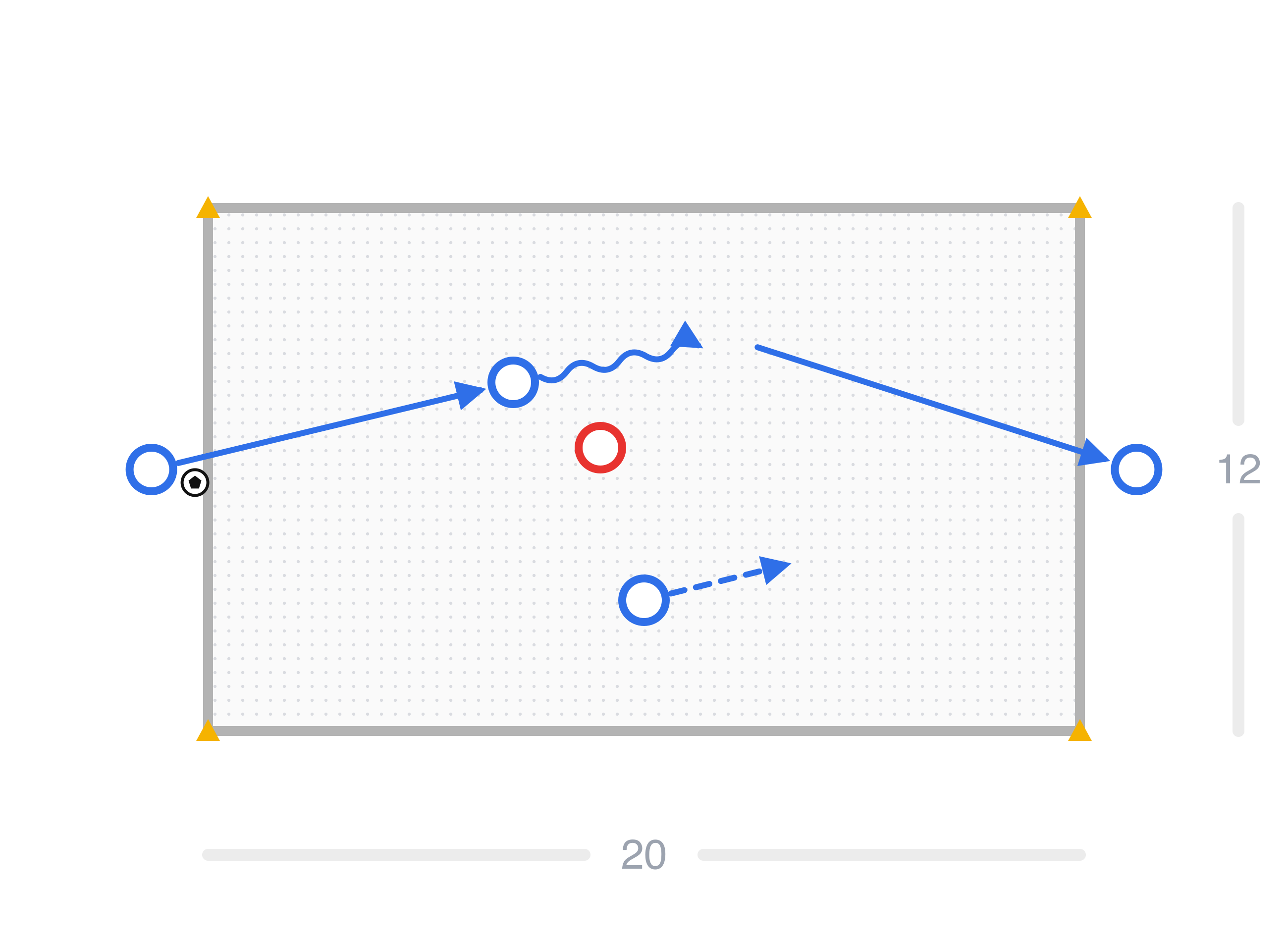
Theme: Receiving under pressure and the first touch forward
Fits: U8 to U12 / 5 to 6 per group / several groups at once
Effects: The habit of receiving side on / the first touch forward / shielding when marked tightly
Set up: A 20 by 12 metre rectangle with an end player at each end and, in the middle, two attackers against one defender. The end player passes to an attacker, who receives, turns or combines, and delivers the ball to the end player at the far end for 1 point. If the defender wins it and passes to the coach, the defender scores 1. End players and middle players rotate every two minutes.
Steps (competition mechanisms):
-
The defender may only shadow, not tackle. One minute on the clock, which group completes the most;
-
The defender may tackle. One minute;
-
Only completions where the first touch is towards the target end count. A ball stopped dead underfoot scores nothing;
-
A completion where the ball was received with the far foot scores 2;
-
Bring in "king of the ring": a defender who wins the ball stays in the middle; a defender who is played through comes out. Who holds the middle longest?
Decoding:
-
With no tackling in step one, the child can put all his attention on his own body: side on, look both ways, which foot. You will see most children face the ball square and turn only after they have received it. Let it show. Say nothing;
-
Once tackling is allowed, the child who faces the ball square is caught immediately, because the moment he turns he cannot see behind him. The game says the sentence for you;
-
Step three is the core of this level. A ball stopped dead does not count, and the child's first touch acquires a direction. The first touch forward is the dividing line, at the individual level, between possession and passing it around;
-
Extra points for the far foot turn receiving side on from "something the coach says" into "something worth money";
-
King of the ring trains the defending too. The child holding the middle discovers that if he stands on the right side, the attacker cannot turn. That is his first lesson in defending anyone.
When to move on: End each session with a one minute race under the step two rules. When most children complete a steady number, and the errors come from the passing rather than the receiving, this level is done.
2. The group level: the rondo
The rondo is the most used possession practice in youth football anywhere in the world. Barcelona call it a rondo, the Dutch call it 4 against 2, and we call it a keep ball square. It adds two things to the individual level: angles and distances.
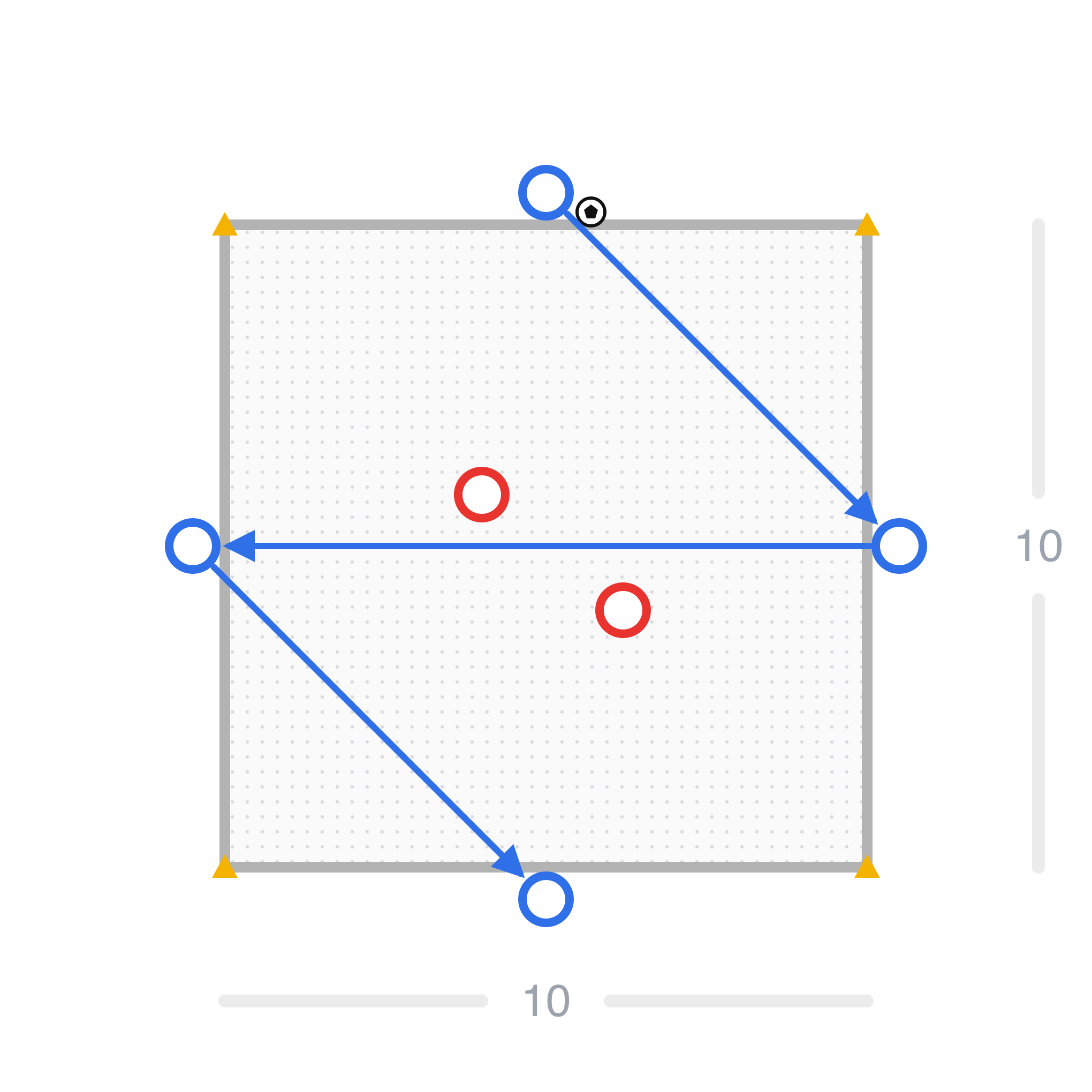
Theme: Angles and distances / the decision to play first time
Fits: U8 to U14 / 5 to 7 players / several groups at once
Effects: Angles of support / speed and quality of the pass / immediate counter pressing after losing the ball
Set up: 4v1 starts in an 8 by 8 metre square, 4v2 uses 10 by 10, 5v2 uses 12 by 12. The outside players move along the sides of the square; the defenders in the middle try to win the ball. The player who loses the ball swaps with the defender who won it.
Steps (competition mechanisms):
-
4v1, unlimited touches, ten consecutive passes score 1. Three minutes;
-
4v1, two touches. Three minutes;
-
4v2, a pass that goes between the two defenders scores 2. Three minutes;
-
5v2, the two defenders must press together, and when they win it they both come out together. Every player's errors are counted, and the fewest errors in three minutes wins;
-
Bring in "winner stays": a defender who wins the ball does not come out. He has to win three before he can, and the fastest to three wins.
Decoding:
-
4v1 lets the children discover angles. With one defender in the middle, if the four outside players stand on the corners there are always two lines open. They will find this themselves, provided you have not told them beforehand;
-
Two touches moves the decision one step earlier. The first touch has to put the ball where the second can be played from, so the child has to know who he is passing to before he receives. This is the first appearance of "third player" thinking;
-
Two points for the pass through the two defenders is the core of this level. The line between the two defenders is the most dangerous and the hardest. Once it pays, the children start hunting for it, and possession begins to mean "forward", even though a square has no forward;
-
Step four brings in a defensive mechanism: fewest errors wins. In Diverse Competition Mechanisms we described the two kinds of target, raising and defensive. This is a defensive one, so the children handle the ball more safely, but the 2 points for the split pass are still there, and safety and threat sit on the same scale;
-
Winner stays makes the middle press properly. The trouble with many rondos is the defender strolling about in the middle. Once he has to win three to get out, he presses from the first second, and the pressure on the outside becomes real.
A word on the rondo's limit. The rondo has no direction and no goal. A child can pass beautifully in a rondo and still not know where to pass in a match. So the rondo is the middle level of possession, not the destination.
When to move on: Play three minutes under the step three rules. When most of the outside passing is one or two touch and the split pass is appearing regularly, move to the team level.
3. The team level: directional possession
The team level has to supply what the rondo lacks: direction. The ball has to travel forward, through different positions, with someone waiting for it further on. At this level we use positional play: neutral players in fixed positions, so the relationships on the pitch resemble the real ones between defenders, midfielders and forwards.
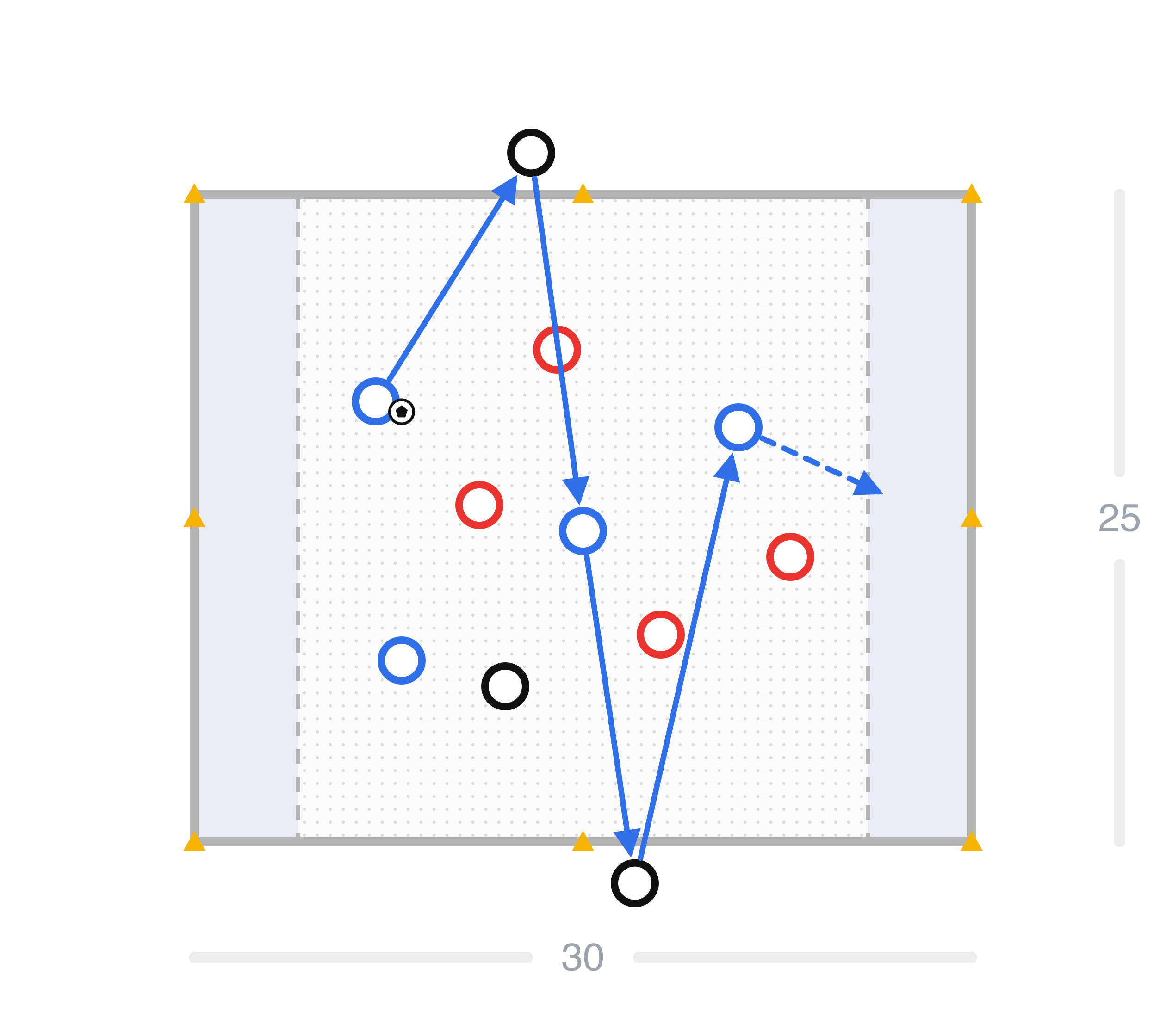
Theme: Progressing from back to front
Fits: U10 to U14 / 4v4 plus 3 neutral players / 11 players
Effects: Possession with a direction / recognising the moment to go forward / progressing after a switch of play
Set up: A 30 by 25 metre pitch with a 4 metre deep end zone at each end. Two neutral players stand on the two touchlines and a third plays as a free player inside. The neutrals always play for the team in possession, with a maximum of two touches. You score by passing to a team mate who has run into the opponents' end zone, or by dribbling into it.
Steps (competition mechanisms):
-
Six consecutive passes score 1. Four minute rounds;
-
Add the end zones. Six passes still score 1, but only as a virtual point; entering the end zone scores 1 real point, and virtual points only cash in when you enter the zone. Four minute rounds;
-
Entering the zone after the ball has gone through a touchline neutral scores 2. Four minute rounds;
-
Switching from one touchline neutral to the other and then entering the zone scores 3. Four minute rounds;
-
Bring in "sudden death": enter the zone within eight seconds of winning the ball and the round is won outright. Four minute rounds.
Decoding:
-
Step one wants only passes, so the children pass it around. That is deliberate. Let them find the neutrals on this pitch first and get used to the comfort of the overload;
-
Step two is the theme of the whole article: possession is not the goal. Virtual points sitting in your pocket are worth nothing; you have to enter the zone to cash them. You will see fewer passes in this round than in step one, and more entries into the zone. That is good. It means the children are starting to ask the question every time they receive: can we go forward now;
-
Two points only through a touchline neutral teaches the children "wide". In a real match, the safest way forward is often down the side;
-
Three points for a switch and then an entry teaches them "the other side". When one side is blocked, the answer is not on that side. After this step you will see the far side children spreading out to wait for the ball instead of crowding towards it;
-
Sudden death is transition. The team in possession is at its most vulnerable the instant it loses the ball, and the team that wins it has its best chance in those eight seconds. The children learn that possession football is not slow football.
When to move on: Take the neutrals out and play 5v5 with end zones. If the children can still progress from the back into the zone, possession has walked out of the practice and into their game. If they cannot, go back to step three for two more weeks.
The seven specific coaching points at this level, threatening passing lines, stance and positioning, the first touch, the importance of going forward, angles and distances between players, creating space for a team mate, are covered one by one in Team Ball Possession: 7 Core Coaching Points. That article is the deep reading for this level.
What possession looks like at each age
The three levels are not three age groups. Every age has all three levels, in different proportions.
U6 to U8: possession is almost entirely the individual level. The child's relationship with the ball is not yet built, and what you want is a child who dares to take the ball, can keep it, and can carry it away. "Team possession" at this age is one pass between two children in a 3v3. If it happens, that is a win. It does not need designing.
U9 to U10: the group level arrives. The rondo starts at 4v1, and the small sided game gets end zones. The children begin to understand angles and distances, and the first "third player" runs appear. These are the two years with the most mistakes at the back, and the two years when "kick it" is shouted loudest.
U11 to U12: the team level arrives. Positional play, neutral players, a complete route from back to front. 9v9 makes the relationship between defenders, midfielders and forwards appear for the first time, and the angles and distances learned on the small pitch start to have the names of positions.
From U13, and only then, formations. A formation is the result of the three levels: a team that can already receive under pressure, find angles and go forward can keep the ball in any shape. A team that cannot passes it around in any shape.
I have seen too many teams do this backwards: formations at U9, and still teaching the side on receive at U13.
From possession to progression
One word has kept coming back through all three levels: forward. It deserves its own section.
A child with the ball has only three options: go forward, keep it, or reorganise. Forward is the purpose, keeping is waiting for the moment, and reorganising is trying another route forward. Possession football is a constant switching between those three, and the coach's job is to make "forward" the child's first instinct and "keep" the second, not the other way round.
How? Not by shouting "forward". By changing the rules.
Two points for a forward pass, one for a square pass, nothing for a backward one. Cash in through the end zone. Cross halfway within five seconds of receiving. A goal after the ball has gone through a neutral counts double. Every one of those rules quietly pushes the child's first instinct forward, and he believes he thought of it himself.
That is the power of rules. In Small Sided Games we explain in detail how the four dials are turned. In a possession session, the scoring dial is always turned to "forward".
Scores, parents and tuition
Now for that voice: "Kick it!"
A U9 to U12 team learning possession will lose matches. The defender is robbed on the edge of his own box, the striker is through on the keeper, and it is a goal. Two of those in a match, and you can picture the faces on the touchline. Meanwhile the team that kicks it long keeps the ball in your half all match and the scoreline always looks better.
This is tuition, and it has to be paid. Is Your Training Session Really Just About Completing a Few Drills? drew the line between "performing" and "learning". Kicking it long is performing: it looks safe. Possession is learning: it looks dangerous.
A ten year old robbed on the edge of his box ten times learns how not to be robbed the eleventh. A ten year old who kicks it long a hundred times learns to kick it long.
This is not professional football.
How do you say this to parents? Say it at the start of the season, not after the goal goes in. Tell them what the team is learning this year. Tell them the scoreline is not this year's report card. Tell them what you will be counting: successful passes in our own third, passes from the back third into the front third, times the striker receives the ball in the opponents' half.
Then show them those numbers every month. Parents do not want to win. They want to know their child is improving. Give them a ruler for improvement and they will stop staring at the score.
And with the children it is simpler than with the parents. The boy who was robbed, next time he receives, you say nothing. He will open his body on his own.
The common ways it gets taught wrong
Finally, the ways we most often see possession taught wrong.
Teaching possession as passing it around. The practice rewards only the pass count and nothing for going forward. Three months later you have a team that is very good at passing it around.
Formations too early. Positional play is not standing in boxes. Under U10, let the children find angles and distances for themselves on a small pitch. The formation is the result of those things, not the precondition.
Touch limits too early. One touch is a fine rule, but U8 and U9 children cannot decide inside one touch, and the limit only makes them kick the ball away. Two touches first, then one, and only once they can already receive side on.
Teaching possession on a big pitch. In an eleven player build up, each child waits too long for the ball and each mistake costs too much. Possession is taught on a small pitch, and 5v5 plus neutrals is its best classroom.
Teaching with the mouth. Every "don't rush" after a forward pass fails, and every "good" after a backward one, pushes the children towards passing it around. To change something, change a rule.
Teaching only the team in possession. The children in the middle of the rondo are learning too: when to press, how to close a line, how two players press together. Possession and counter pressing are two sides of the same session. Treat the middle as sparring partners and you throw away half of it.
Ending
At your next match, count two numbers: how many times your team passes the ball from the back third into the front third, and how many times it kicks it long.
You do not need to tell the children, and not the parents yet either. Tell yourself first, and then decide what next week's session trains.
Possession is not about never losing the ball. It is about getting the ball forward.